Over the past eight months, we have partnered with the Forgiveness Project, a charity founded by Marina Cantacuzino MBE, which helps people explore the benefits and complexities of forgiveness. Executive Director Sandra Barefoot is clear that forgiveness is never prescribed or imposed. Instead, it’s offered as a concept for enquiry, a way to explore the difficult emotions around hurt, pain and grief to help find a path towards healing.
Rooted in the belief that stories have the power to transform, the Forgiveness Project collects and shares personal narratives that illuminate restorative responses to harm and conflict, sharing real-life accounts from around the world of how people and communities learn to rebuild and recover after difficult times. Through storytelling, they work alongside individuals who have experienced pain and trauma.
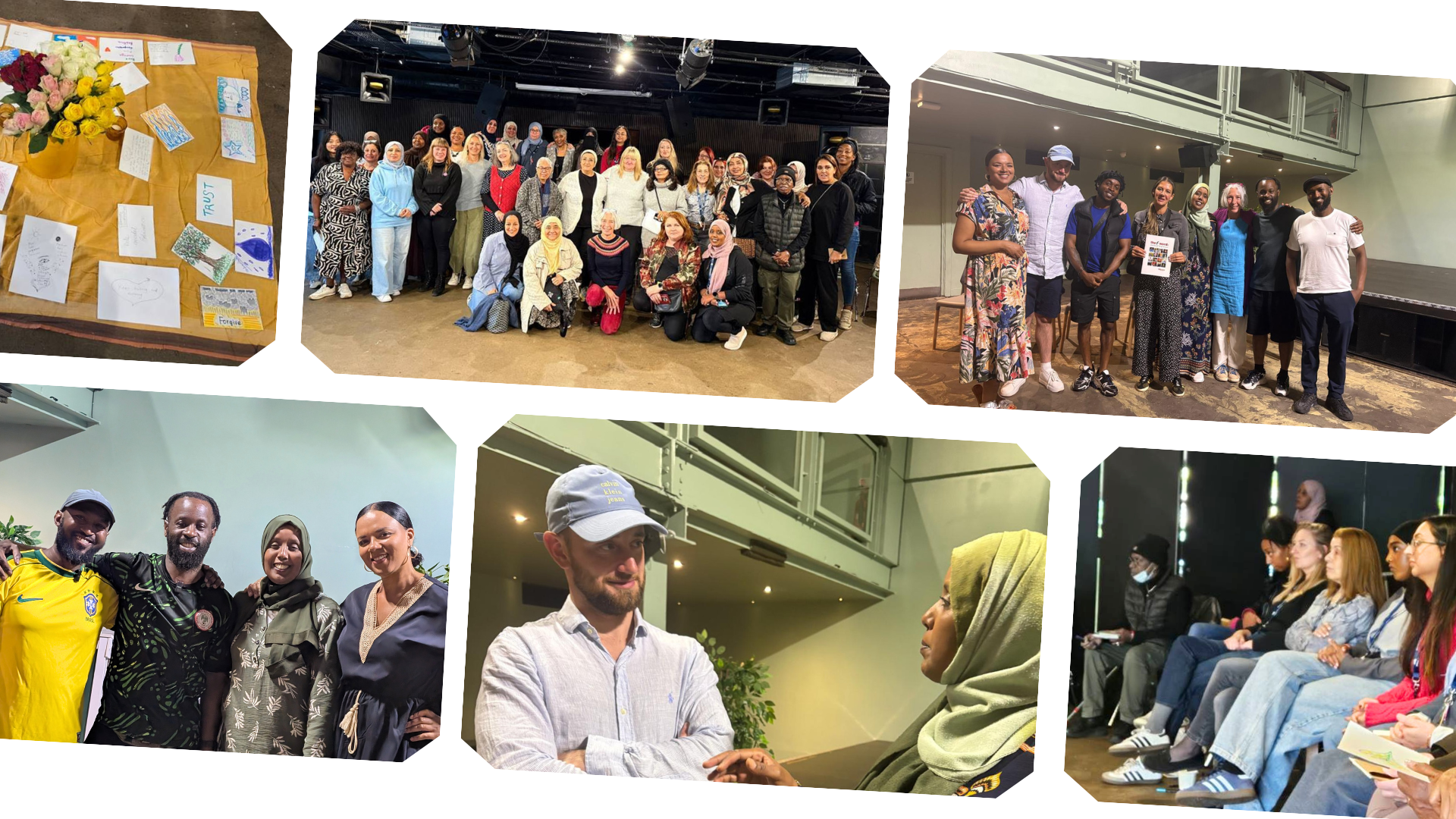
Together, we have held a series of ‘Cafés’, bringing specific groups of people together to share and explore their life experiences in a communal, discussion-based setting. Each Café offers a contained safe space where attendees can experience and share difficult emotions and stories, while being heard and supported by Sandra and her facilitators, people who are either trained practitioners or have navigated difficult experiences themselves.
The first event, back in October 2025, was the Women and Mothers Café (40 attendees), which harnessed the power of storytelling to explore grief, harm, and guilt. Attendees heard from Joan Scourfield, the mother of James Hodgkinson, who was killed by a single punch in 2011 and whose family later met his attacker, Jacob Dunne, through restorative justice. After meeting James’ mother Joan through restorative justice, Dunne turned his life around. Their story is now brought to life in the theatre production Punch, which has had runs in the West End and on Broadway. He is now Advocate for Restorative Justice in the Youth Justice System for the UK’s Ministry of Justice (MoJ). The second speaker was Dunia Shafik, whose eldest son was sentenced to 22 years for murder, and who has since used her story to support young people and prisoners. Attendees then shared their own experiences and explored the role of forgiveness in their own lives.
Feedback on the session included:
“Coming together. The honest, willingness to share and consider hope beyond pain. A group of women – the sharing was poignant, beautiful, soulful, inspirational. I have so much gratitude. Thank you.”
“A lot of space for reflection and the storytellers were very brave and generous with sharing – thank you.”
“It was so beautiful to see how space was given to different versions of pain and healing. It felt very safe and vulnerable.”
Most recently, in May 2026 we held three Community Cafés at ACRES, for Parents, Young Boys, and Older Boys.
The Parents’ Café (40 attendees) offered a compassionate space to share lived experiences and reflect on the question: ‘How can we, as parents, do things a little differently to support our children?’ The group explored letting go of fear to speak more openly with children, practical skills to support rather than judge them, restorative approaches to conflict, and how to recognise behaviours that may signal deeper concerns and where to seek help. Jacob Dunne co-facilitated alongside Raushia Coles, a trauma-informed humanistic and gestalt counsellor. She shared her own hardships from her childhood and her experience in the criminal justice system. She now helps parents to guide children away from that path and has spent the past 15 years working in health and social care in high-intensity hostels and rehabilitation centres.
The Young and Older Boys’ Cafés (25 attendees) provided a safe, supportive space to reflect on the question: ‘How can we better understand ourselves, our relationships, and the choices we make?’ The sessions explored the challenges of growing up, perspectives on rebellion and the desire to appear “cool”. The group also discussed NVR (Nonviolent Resistance), non-violent communication, and restorative practices to address conflict and improve communication with parents. Co-facilitators were Aaron Anthony, a youth justice advocate, practitioner, and spoken word artist with nearly two decades working with young people across London, and Bob Mugisha, a trauma-informed practitioner and trainer with over a decade’s experience supporting young people and communities affected by violence, exploitation, and social injustice.